A Speech-Language Pathologist (SLP) is a professional who is trained to evaluate and treat communication disorders, cognitive disorders, and swallowing disorders in people of all ages. SLPs may also call themselves Speech Therapist, Speech Clinician, or Speech Teacher depending on where they work or personal preference.
The most important credential your speech-language pathologist should have is to be Nationally Certified by the American Speech-Language Hearing Association (ASHA). You can tell if a SLP is nationally certified by the initials CCC-SLP after their name.
Speech-Language Pathologists must also be licensed by the state in which they provide services. All SLPs are required to complete ongoing rigorous education credits as part of maintaining their national certification and state licensure. Speech therapists tend to become specialized in treating either adults or children and often in a certain treatment area.
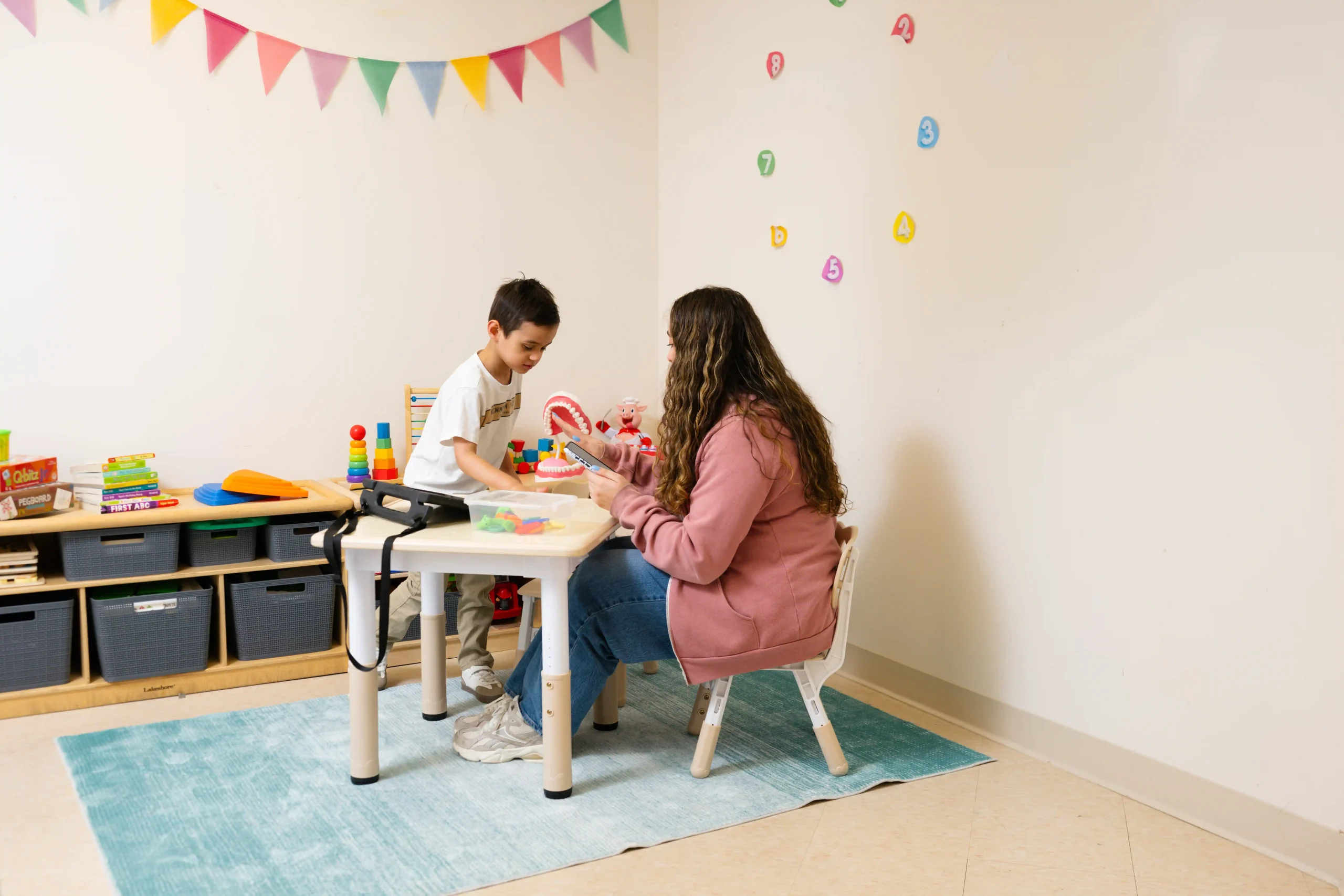

Adults are seen by an Speech-Language Pathologist (SLP) when they have suffered some kind of damage to the brain, typically from a traumatic brain injury (TBI), stroke, dementia, Alzheimer’s disease, or other neurological process. An SLP may also help with communication or swallowing after treatment for head and neck cancers. SLPs assess and address skills in adults who have disorders of the following:

Difficulties in understanding the words we hear or read
Difficulty communicating due to lack of vocabulary, word construction or order skills – may include use of Augmentative and Alternative Communication (AAC) methods
Difficulty with adequate strength, range or coordination of movement of the mouth (such as with Apraxia or Dysarthria)
Difficulty with ability to chew or swallow food or liquid which may include entry into the airway (often observed as choking, coughing while eating or drinking or pneumonias)
Difficulty using voice pitch, loudness, or quality when speaking
Difficulty remembering and retaining information, reasoning and calculating in daily activities such as understanding and following medication schedules, safety awareness, orientation, or handling finances
Difficulty speaking without excessive prolongations, hesitations or repetitions of sounds or words
Adults are seen by an Speech-Language Pathologist (SLP) when they have suffered some kind of damage to the brain, typically from a traumatic brain injury (TBI), stroke, dementia, Alzheimer’s disease, or other neurological process. An SLP may also help with communication or swallowing after treatment for head and neck cancers.

Difficulty with adequate strength, range or coordination of movement of the mouth (such as with Apraxia or Dysarthria)
Difficulty with ability to chew or swallow food or liquid which may include entry into the airway (often observed as choking, coughing while eating or drinking or pneumonias)
Difficulty using voice pitch, loudness, or quality when speaking
Difficulty remembering and retaining information, reasoning and calculating in daily activities such as understanding and following medication schedules, safety awareness, orientation, or handling finances
Difficulty speaking without excessive prolongations, hesitations or repetitions of sounds or words
Adults are seen by an Speech-Language Pathologist (SLP) when they have suffered some kind of damage to the brain, typically from a traumatic brain injury (TBI), stroke, dementia, Alzheimer’s disease, or other neurological process.
Difficulties in understanding the words we hear or read
Difficulty communicating due to lack of vocabulary, word construction or order skills – may include use of Augmentative and Alternative Communication (AAC) methods
Difficulty with ability to chew or swallow food or liquid which may include entry into the airway (often observed as choking, coughing while eating or drinking or pneumonias)
Difficulty remembering and retaining information, reasoning and calculating in daily activities such as understanding and following medication schedules, safety awareness, orientation, or handling finances
Difficulty speaking without excessive prolongations, hesitations or repetitions of sounds or words